
Vivitar 90mm 2.8 Macro
Published
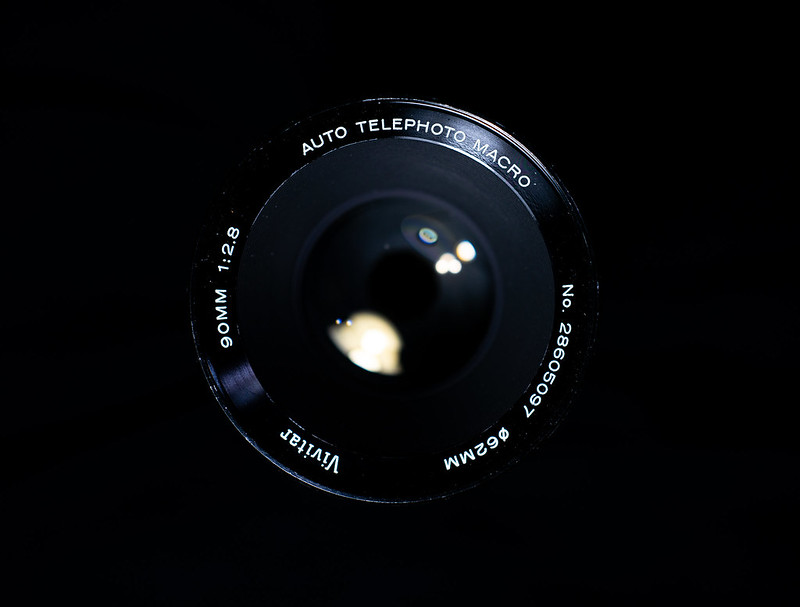
- Mount
- Canon FD
- Focal length
- 90 mm
- Max aperture
- 2.8
- Minimum focus
- 0.35 m
- Filter size
- 62 mm
- Weight
- 480 g
- Coating
- MC
- Type
- Prime
Lens story
I have a list of lenses (in my mind) that I keep a constant lookout for. Some are ones I've read a ton about, others I'm just curious about. I've used the Micro-Nikkor 55mm 2.8 as my dedicated macro for a while, but I've always found the need for macro rings to achieve higher magnification a bit cumbersome, so a native 1:1 macro lens has always been on my wishlist. On one of my trips, I saw a small lens which, when focused closer, grew to twice its size! I knew it was a macro and hoped for the fabled Tokina-made 100/105mm one! It turned out to be the Vivitar, made by Komine (you can tell by the first two letters of the serial number), which is still pretty well regarded. Photography has been slower this past year, with a ton happening and little time, so I shot with it for around 3 months. Here's what I found:
Handling
This is a very solid metal lens. It has heft, and when you extend it to 1:1 magnification it feels like a long telephoto. My copy was generally dirty on purchase, but the optics were excellent, without a single blemish. It's missing the rubber grip, which is a problem with some older Vivitars. It's completely removed, so it doesn't look or feel that bad, and there's none of that sticky goo left! There's a really long focus throw, almost 3 turns to maximum magnification, which is good for precise macro focusing. The front element is recessed, which should in theory help with flare, but I did experience some quite a few times. The filter thread is 62mm, which is bigger than any I have, so I had to shade the lens with my hand quite a few times. One weird thing I noticed is that when I tried scanning negatives, there was always flare in the corners. This could be owed to reflections from the Sony a7's sensor or my scanning setup, as a DIY lens shade didn't help a lot.
Optical performance
It has a generally narrow depth of field and good sharpness overall. Even at f2.8 I've not found the results lacking. Contrast is good, with some chromatic aberration wide open, but overall it is usable. Stopping down (as with most lenses) improves things drastically. I usually shot the lens at f4 instead of f2.8, just for that extra kick in sharpness and contrast. Overall, apart from flaring, I'm happy with this lens, and some of the images I got from it are amongst my favourites so far.
Final thoughts
If you want a 1:1 macro lens, this is a good pick. Especially as a short telephoto, it gives you more breathing room with your subjects so close to the lens. It's not the fabled Bokina (Vivitar-branded Tokina), but it's still a solid performer. Not having a cult following and raving fans means the price is more realistic as well.